
Emerald Coast Motor Club’s Noise Study Never Studied the Racetrack
Emerald Coast Motor Club Noise Study Measures Silence, Not Racecars
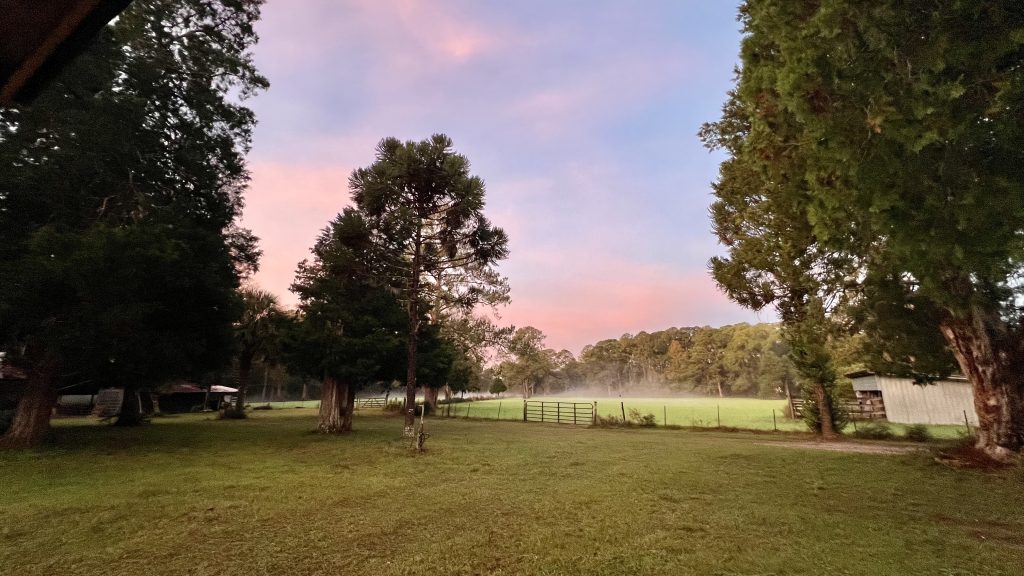
Walton County is being asked to approve the 3.5-mile Emerald Coast Motor Club based on a sound study that never studied the racetrack.
That is not an exaggeration. It is what the file shows. The applicant’s noise study measures how quiet the neighborhood is today. It does not predict how loud a single home will be once the cars are running. More than 800 people live within about 1.5 miles of the site, according to U.S. Census Bureau records. None of their homes appears in the study as a measurement point.
What the study is
Siebein Associates filed a Site Noise Measurement Study on May 13. It is a baseline survey. Its stated purpose is to determine existing background sound levels on the property.
It found what you would expect. Traffic on U.S. 331. Insects. Wind. Day-night averages of 45 to 54 decibels in the interior of the site, and 63 to 68 near the highway. At night, some readings dropped to 20 to 27 decibels. The report calls the site typical of land near a busy road.
The study does not include sound levels for the cars that will use the track. It does not model how sound travels off the property. It does not predict a level at any neighboring house. All eight measurement points sit on the developer’s own land.
It also does not account for more than one car at a time. The CPUD application describes run groups of 15 to 30 cars, and special events of 60 to 100. Twenty cars running at once produce roughly 13 decibels more than one car. That math does not appear anywhere.
Finally, the study does not compare anything to any standard — not the county noise ordinance, not the Land Development Code. A baseline like this tells you what you are about to change. It cannot tell you how much you will change it.
Why the percentages don’t mean what they sound like
The developer’s CPUD project narrative advertises noise reductions of “up to 75%,” “up to 90%” and “more than 90%.” Each figure carries the same footnote: compared with the level at 50 feet. Nobody lives 50 feet from the track.
And those reductions are not engineering. They are distance. Sound drops about 6 decibels every time you double the distance from it. Going from 50 feet to 428 feet is about three doublings, or roughly 19 decibels — the advertised 75%. The same drop would happen with a leaf blower or a church bell.
If you run the numbers forward instead, a car putting out 100 decibels at 50 feet, minus the developer’s own 20-decibel reduction, it still arrives at about 80 decibels at 428 feet. The measured nighttime background there is in the 20s. The developer’s own data shows this is a quiet place. That is an argument for a real study, not against one.
Walton County’s standard is not a decibel limit
Most residents might assume Walton County has a decibel cap. It does not. Under Walton County Ordinance 2014-16, it is unlawful to cause a noise disturbance that is plainly audible from inside someone else’s occupied home. A noise disturbance is defined as continuous sound that disturbs the peace, quiet and repose of an ordinary person. Between 10 p.m. and 6 a.m., that becomes a criminal offense.
The ordinance exempts emergency vehicles, garbage trucks, road work, permitted construction, lawn care, aircraft, military operations, farming, industrial uses in properly zoned districts, permitted outdoor events between 6 a.m. and 10 p.m., and school events.
A private motorsports club is not on that list. Whether one would qualify for any exemption is an open question the county has not answered publicly. It cannot be answered without knowing how loud the track will be inside the houses around it. That is a lower bar than 85 decibels. And a study that predicts no level at any home cannot show compliance with a rule written around what people hear inside their homes.
What happened in Osceola County
Osceola County faced nearly the same question with the proposed Orlando Motorsports Park. It is the closest Florida example available.
The developer asked for a noise variance. He initially sought approval for levels up to 90 decibels, then scaled back to 75 and offered a redesigned track, shorter hours and a taller wall. The county received more than 100 emails and letters against it.
Osceola County did not take the developer’s consultant at his word and hired its own acoustical engineer, experienced with motorsports noise. The findings did not match the developer’s. The applicant projected about 65 decibels at nearby homes and resorts behind a 10-foot sound wall. Osceola’s expert concluded neighbors could still see averages as high as 85 decibels, and that the wall would need to be at least 20 feet tall to do what was claimed. The expert also noted that people file noise complaints regardless of technical compliance, because racing engines sound dangerous.
The county’s Development Review Committee recommended denial. The track was never built. The two sets of numbers were about 20 decibels apart. That is a fourfold difference in how loud it actually sounds. Only the independent review found it.
What happened on Vancouver Island
The Vancouver Island Motorsport Circuit near Duncan, British Columbia, is a Tilke-designed club in the same network as the one proposed here. When the Municipality of North Cowichan hired Navcon Engineering Network to review the developer’s noise study, Navcon found the testing had been done on an unusually quiet day, with Porsche owners driving slow laps. Real operations were louder. Navcon called the impacts significant and said even the developer’s own data showed the noise was audible and intrusive.
The expansion was denied. The British Columbia Court of Appeal upheld the denial unanimously.
Why this can’t wait
The usual answer to all of this is that a fuller study will come later, at the detailed PUD stage. That is the problem.
The conceptual PUD is the governing document. It sets the uses, the intensity and the layout that everything after it must follow. Once it is approved, the question is no longer whether a 3.5-mile racetrack belongs next to 800 residents. It is only how to draw one that fits what was already approved.
By then the county has already found the project compatible without knowing how loud it will be. The track corridor is largely fixed, which forecloses the design changes that matter most for sound. Sound barriers remain undefined — the developer’s own strategies document says the final layout depends on detailed PUD design. And residents lose the leverage that exists only before an approval.
In Osceola, a redesigned track, shorter hours and a taller wall were all on the table. The independent analysis still showed the numbers did not work. That finding came before approval. That is why it mattered.
What a real study would include
- Sound levels for the actual vehicles allowed on the track, measured at speed.
- Predictions at real off-site locations — homes, churches and North Walton Doctors Hospital — not points on the developer’s property.
- Full run groups and special events, not one car.
- Low-frequency analysis. Engine noise concentrates below 500 hertz. Low frequencies carry farther and pass through walls and windows. Standard averages understate exactly the part that keeps people awake.
- Weather and terrain effects. Temperature inversions and downwind conditions routinely add 10 decibels or more across flat, rural land.
- A finding on whether the track would be plainly audible inside neighboring homes, day and night, which is the actual county standard.
- Specific barrier commitments — height, length, location and performance — binding now, not later.
- And a peer review paid for by the county, not the applicant.
The bottom line
The developer has carefully measured the quiet it proposes to end.
Osceola County asked for more and found the projections off by about 20 decibels. North Cowichan asked for more and found the study had been run on an unrepresentative day. Both were right to ask.
Walton County has not asked yet. The conceptual PUD is the last point where asking still changes anything. If a complete study would confirm what the developer has promised, doing it now costs him nothing but time, and settles the question for good.
So the fair question is this: why not do it now?
Sources: Siebein Associates, Site Noise Measurement Study, May 13, 2026; Siebein Acoustic, Initial Acoustical Planning Strategies, June 25, 2026; ECMC Conceptual PUD Project Narrative, July 1, 2026 (Walton County Planning Department, PRE26-000426); Walton County Code of Ordinances, Chapter 9, Article V (Ord. No. 2014-16); U.S. Census Bureau; GrowthSpotter, Oct. 5, 2017; WFTV Channel 9; Power Acoustics Inc. expert witness record; Municipality of North Cowichan and Navcon Engineering Network; British Columbia Court of Appeal.
This article is for informational purposes only. All statements are based on public application materials, adopted ordinances, government records and independent media reports. Nothing here asserts wrongdoing or predicts future outcomes by the applicant. Readers are encouraged to review the primary documents and draw their own conclusions.